Bivariate Regression Analysis
This analysis was used to explore the relationship between opioid overdose rates and each of the following indicators: unemployment rates, prescription rates, and educational attainment.
Unemployment rates and opioid overdose rates had the strongest correlation (although the r value suggests it is still a weak relationship). In other words, as unemployment rates increased, opioid overdose rates increased as well. Both variables increased in response to one another, but not because of one another. There were other factors that played a role in overdose increases, so unemployment alone cannot be considered a cause.
I found it interesting that prescription rates had the lowest correlation coefficient since the prescribing practices of opioids are considered to have started the crisis. Had the overdose rates in the dataset been restricted to just prescription opioids, I believe the correlation would have been stronger.
Refugee Hosting Countries vs GDP
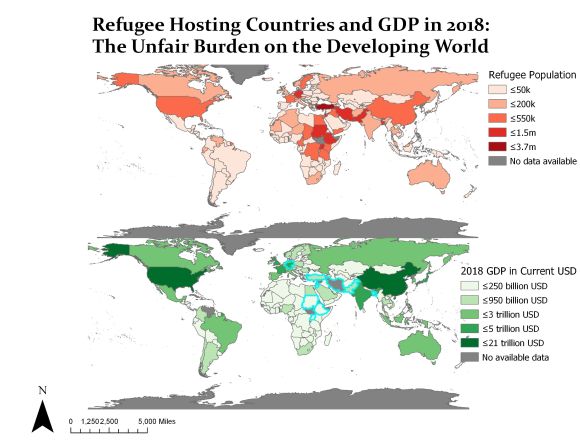
Addressing the relationship between development (measured by GDP) and refugee population around the world. The top hosting countries in order were Turkey, Pakistan, Uganda, Sudan, Germany, Iran, Lebanon, Bangladesh, Ethiopia, and Jordan.
Tornadoes in DC: 1950-2018
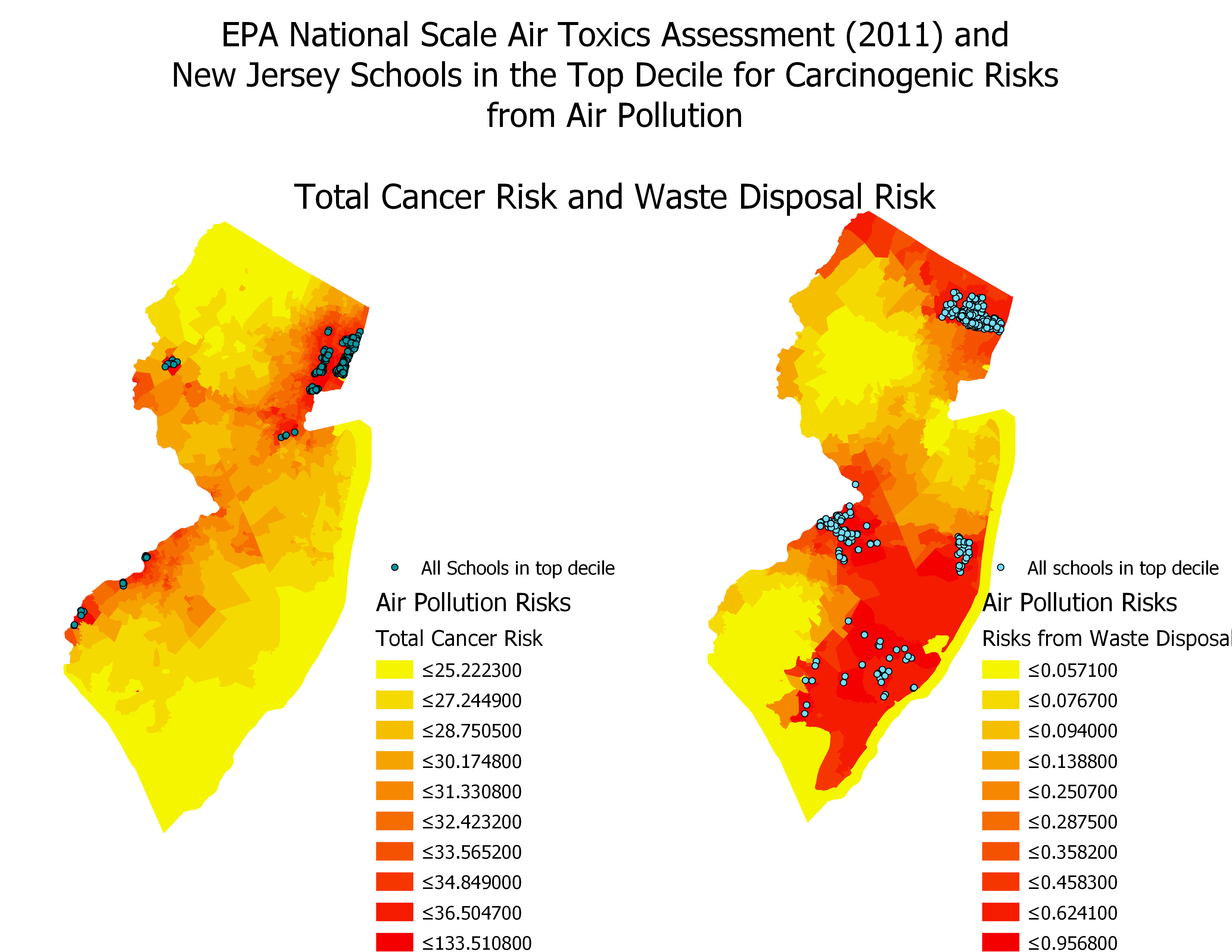
Using the EPA National Air Toxics Assessment, I was able to map the schools in New Jersey that are at the highest risk of carcinogen exposure from air pollution. On the left is the total cancer risk for these schools with the schools in the top decile indicated by the small blue dots. On the right are the schools at the highest risk from waste disposal. Notice the overlap in Northeast NJ.
 Aly Axman